
Bakery Stack: Cooking Games
Fried Chicken GamesCasual
3.9131.00 Reviews
- Version
- 0.6.25
- Installs
- 50.00M
- Age Rating
- Teen
Screenshots
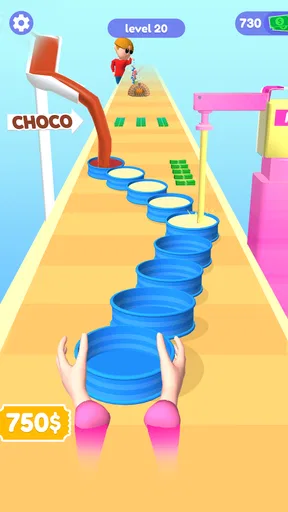
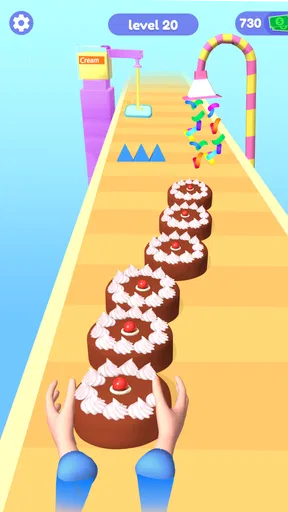




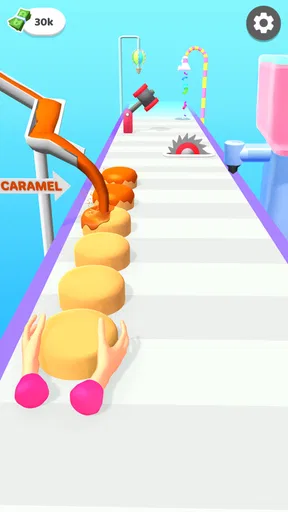

Our Review of Bakery Stack: Cooking Games
 Analysis by Appyee
I spent time with Bakery Stack: Cooking Games, a casual baking game from Fried Chicken Games, and my first impression is that it aims for quick, satisfying sessions rather than a deep restaurant-management experience. The central idea is easy to understand: move through a baking race, collect what you need, and finish cakes by applying cream as neatly as possible. It is the kind of game I can open for a short break without needing to remember a complicated story or learn a long list of controls.
That simplicity is both its biggest strength and its main limitation. If you enjoy light obstacle-course games with a food theme, the presentation makes the basic loop immediately approachable. If you are looking for detailed recipes, creative decoration tools, or a serious cooking simulation, this is probably not the right place to start. My experience was closer to a quick arcade challenge dressed as a bakery than to a full kitchen game.
How the current version feels in everyday play
When I think about how this game fits into an ordinary day, the main question is whether its quick race-and-finish rhythm feels comfortable on your device and in your available time. I’d start with a brief session and pay attention to whether the controls feel steady rather than trying to judge it by one rushed run. That makes it easier to separate a genuine mismatch from a small setup snag.
A straightforward baking race that is easy to pick up
The game puts the emphasis on movement, timing, and collecting the right items while progressing toward a finished cake. The cream stage gives the run a clear goal: it is not enough to reach the end, because the way the cake is completed matters too. That small finishing step helps the game feel more purposeful than a simple forward-running obstacle course.
I found the basic interaction comfortable for short sessions. There is no need to study a tutorial for a long time before playing, and the bakery setting makes the action more cheerful than an abstract track filled with anonymous objects. The design is clearly aimed at people who want immediate feedback. You make a move, see the result, and can quickly try again with a better approach.
One useful habit is to treat each run as a planning exercise rather than rushing toward every visible item. The most obvious path is not always the best one if it leaves the final cake poorly prepared. I started paying more attention to the order of choices and saving a little concentration for the cream application. That changed the game from simple swiping or steering into a small sequence of decisions.
Why the cake finish matters more than it first appears
The cream stage is the part that gives the game its identity. Many casual runners are satisfied once the character reaches the finish line, but here the final bakery task provides an extra moment of judgment. I liked having a clear end-of-run action because it made the earlier collection choices feel connected to the result.
For a new player, my advice is not to focus only on speed. A fast run can still feel disappointing if the cake is not completed carefully. Instead, use the early part of a level to understand the route, then approach the finishing section with deliberate movements. This is especially helpful when playing with one hand, because hurried gestures are more likely to spoil the final presentation.
That said, the appeal of this system depends on how much variety a player wants from a casual game. The first few sessions benefit from the novelty of combining a race with cake preparation. Over longer play, people who need constant new mechanics may find the loop familiar. The game works best when viewed as a compact repeatable challenge, not as an endlessly expanding baking workshop.
What the developer’s current release tells me
Fried Chicken Games lists the current version as 0.6.25, which suggests the product is still in an evolving stage rather than presenting itself as a finished, unchanging package. I would read that as a reason to keep expectations practical: the current experience is the one to judge today, while future improvements should be treated as possibilities rather than promises.
The game originally appeared on June 19, 2023, and its continued presence indicates that it has had time to find an audience. Its average rating is 3.9 from around 50 thousand ratings, with about 131 written reviews shown alongside it. That combination gives me a mixed but useful signal: enough people have tried it to make the concept familiar, yet the score also suggests that the quick arcade format will not satisfy everyone equally.
For existing players, a version number like this matters less as a technical label and more as a reminder to check the game after updates. Casual titles can change their balance, pacing, or presentation without becoming a completely different product. I would not reinstall it expecting a new genre, but I would revisit it occasionally if I enjoyed the basic cake-running loop and wanted to see whether the experience had become smoother.
Who will get the most from it
I think this game suits players who want something light between other activities. A realistic use case would be waiting for a bus, taking a short break from studying, or relaxing after work when a long strategy session feels like too much effort. You can focus on a few runs, put the phone away, and return later without losing the simple idea of what you are doing.
It is also a reasonable choice for someone who likes food-themed games but does not want the pressure of managing customers, menus, staff, or a large restaurant. The cake objective gives the game a pleasant identity without requiring the player to maintain a complicated bakery. That makes it more approachable than management alternatives for people who prefer direct actions over planning an entire business.
Parents and younger players should still pay attention to the Teen content rating. The bakery theme may look friendly, but the official age classification is the better guide when deciding whether it fits a particular player. I would not assume that a colorful casual presentation automatically makes it suitable for every child.
Free to start, with a detail worth remembering
The game is free to download and play, while in-app purchases are listed at $0.99 per item. That makes it easy to try without committing money first, which is appropriate for a casual title whose appeal becomes clear within a few sessions. I would begin with the free experience and only consider spending if the game becomes a regular part of my routine.
The practical trade-off is that free games often encourage players to think about optional purchases while they are playing. Even a small individual amount can become less small if someone buys repeatedly without a plan. My approach would be to decide in advance whether I am treating the game as a completely free pastime. If so, I would avoid making a purchase simply because a run went badly or because I wanted to progress faster.
This is also one reason I would not recommend it as a gift choice for someone who dislikes mobile monetization. A player who expects a single upfront purchase and a fully fixed experience may prefer a paid cooking game instead. Bakery Stack is better suited to someone comfortable trying a free casual game and judging whether its optional spending feels worthwhile.
How it compares with other casual cooking games
Compared with restaurant-management games, this one asks for less long-term organization. You are not building a menu or balancing several customer demands; the focus stays on the run and the cake. That makes it faster to understand and easier to play in short bursts, but it also means there is less room for players who enjoy upgrading a business or making strategic decisions across many systems.
Compared with traditional endless runners, the baking theme and cream-focused finish give each attempt a more recognizable destination. The run is not just about surviving obstacles or reaching a distance. However, players who mainly want speed, reflex challenges, and constant movement may find the cake preparation less exciting than a pure runner’s uninterrupted action.
Compared with creative cake-design apps, the difference is even clearer. This game is about completing a guided challenge, not freely choosing every decoration or experimenting with elaborate recipes. If your favorite part of baking games is artistic control, you may feel restricted. If you prefer a clear target and quick feedback, that restriction can actually make the experience more relaxing.
Small techniques that improve the experience
My first practical tip is to separate route learning from score chasing. On an early attempt, watch how the course is arranged and notice which choices affect the cake at the end. Once the route feels familiar, try to improve your result. This is less frustrating than demanding a perfect run immediately, especially when the final cream step is affected by rushed movement.
Second, use short sessions to your advantage. The game’s casual structure is more enjoyable when I stop after a handful of attempts instead of forcing a long marathon. When the controls begin to feel automatic or repetitive, taking a break makes the next session feel fresher. This is a better fit for the game than expecting it to replace a larger adventure or simulation title.
Third, keep the phone position consistent. Because the final cake action rewards control, changing from one-handed play to an awkward grip can make a noticeable difference in how confidently I move. I prefer holding the device securely and using the same thumb position throughout a run. That sounds minor, but consistency helps when the game asks for quick choices followed by a careful finish.
A fourth insight is to judge progress by consistency rather than by one unusually good attempt. The bakery theme makes it tempting to chase a perfect-looking cake every time, but casual games are easier to enjoy when improvement is gradual. I found more satisfaction in reducing careless mistakes than in restarting repeatedly after one imperfect result.
Where the current experience still falls short
The main weakness is repetition. The central loop is clear and accessible, but players who need a wide range of recipes, environments, or management layers may soon want more. The game’s strength is that it does not overwhelm the player; the cost is that it may not provide enough depth for a long daily session.
The other limitation is the narrow type of creativity on offer. Completing a cake and applying cream can be satisfying, but it is not the same as designing a cake from the ground up. I would not choose this game to express a personal decorating style. I would choose it for the small challenge of getting through the course and handling the final step well.
The rating of 3.9 also fits my overall impression: this is a likable idea with a specific audience, not a universal recommendation. Some players will appreciate the quick controls and cheerful theme, while others will see the same simplicity as a lack of substance. Neither reaction feels surprising once the game has been played for a while.
Device compatibility is reasonably broad, since it supports Android 6.0 and later. That makes it accessible to people using older phones, although the exact feel can still depend on the device’s screen, responsiveness, and available performance. I would give the game a short trial on an older handset before making assumptions about how comfortably the gestures will work during the cream stage.
What I would like to see as it develops
Because the current release is still identified as version 0.6.25, I would watch for improvements that deepen the existing idea without burying it under unnecessary systems. More meaningful variation between runs, clearer reasons to replay a course, and additional ways to make the finished cake feel distinct would strengthen the game while preserving its quick-session character.
I would also value refinements that make the relationship between route choices and the final cake easier to understand. When a player knows why a decision helped or hurt the result, the game feels skill-based rather than random. That clarity is especially important for new players who are still learning whether they should prioritize speed, collection, positioning, or careful finishing.
For current users, the sensible approach is to enjoy what is already present and judge future changes by how they affect that core rhythm. A larger feature list would not automatically make the game better. The best evolution would keep the controls simple while giving experienced players a reason to return beyond repeating the same familiar pattern.
My recommendation after playing
I recommend Bakery Stack to anyone who wants a free, food-themed casual game built around short baking races and a simple cake-finishing challenge. Fried Chicken Games has created an approachable concept that is easy to explain to a friend: guide the run, make sensible choices, and try to finish the cake neatly. Its large audience, with over 50 million installs, shows that the format has broad reach, even though the average score points to a more mixed experience than a universally loved one.
I would skip it if you want detailed cooking simulation, open-ended cake decoration, a strong story, or deep long-term management. A restaurant builder or creative baking app will serve those needs better. I would also be cautious if you dislike optional purchases in free games, even though the listed items cost $0.99 each.
For me, the game works best as a small break-time distraction. Its current version offers an uncomplicated route into casual baking play, and the cream finish gives the runs a useful sense of purpose. It is not trying to be a complete bakery business or a serious culinary simulator. Within that narrower goal, the most important thing is to play for controlled, repeatable runs rather than frantic speed. If that sounds enjoyable, the free entry point makes it easy to find out for yourself.
Verdict
Strengths of Bakery Stack: Cooking Games
- Simple controls make stacking and serving pastries easy to learn.
- Short levels fit well into quick gaming sessions.
- Colorful bakery visuals create a cheerful, relaxing atmosphere.
- Unlockable recipes and upgrades add a sense of progression.
- Offline play is convenient when you have no internet connection.
Limitations of Bakery Stack: Cooking Games
- Gameplay can become repetitive after mastering the basic stacking routine.
- Ads may interrupt progress or appear frequently between levels.
- Later stages may rely more on speed than thoughtful strategy.
- Some upgrades or bonuses may encourage optional in-app purchases.
- Performance can vary on older phones with limited memory.
Other Releases by Fried Chicken Games
View All
Build a Doll
Casual4.4

Crazy Challenge: Mini Games 3D
Arcade4.6
Similar Picks in This Category
View All
My Talking Angela
Outfit7 Limited4.2

My Talking Tom
Outfit7 Limited4.3

Pou
Zakeh4.2

My Talking Tom 2: Pet Game
Outfit7 Limited4.3

Candy Crush Saga
King4.6

Bridge Race
Supersonic Studios LTD4.1
Frequently Asked Questions
What is Bakery Stack: Cooking Games about?
Bakery Stack: Cooking Games is a casual bakery-themed game where you prepare, stack, and serve sweet treats while managing orders and progressing through different levels. The gameplay focuses on simple tap-and-swipe interactions, colorful visuals, and quick challenges. It is designed for players who enjoy relaxing cooking games with short sessions rather than complex restaurant-management simulations.
Is Bakery Stack: Cooking Games free to download and play?
The game is generally available as a free download, allowing players to begin playing without paying upfront. However, free versions of casual mobile games may include advertisements, optional in-app purchases, or both. These purchases can sometimes provide extra resources, remove ads, or speed up progress. It is a good idea to review the store listing and purchase settings before handing the game to children.
Does Bakery Stack: Cooking Games require an internet connection?
Bakery Stack: Cooking Games may allow some basic gameplay without a constant internet connection, especially for levels that have already been downloaded. Nevertheless, an internet connection can be required for advertisements, reward videos, updates, cloud features, or certain online services. Offline availability may also vary between Android and iOS versions, so players should test the game after installation rather than assume every feature works offline.
Is Bakery Stack: Cooking Games suitable for children?
The game’s colorful bakery setting, straightforward controls, and non-violent gameplay generally make it approachable for children and families. Even so, parents should check the age rating, advertising content, and available in-app purchases on the relevant app store. Younger players may also benefit from purchase restrictions or parental controls, since repeated gameplay and optional rewards can encourage longer sessions.
What devices are compatible with Bakery Stack: Cooking Games?
Compatibility depends on the version available for your device, operating-system requirements, and the developer’s latest updates. Before downloading, check the official Google Play or App Store page for supported Android or iOS versions, required storage, and device limitations. The game should run best on relatively modern phones and tablets, while older devices may experience slower performance, longer loading times, or reduced visual quality.
Play our best games!


